
 Questions?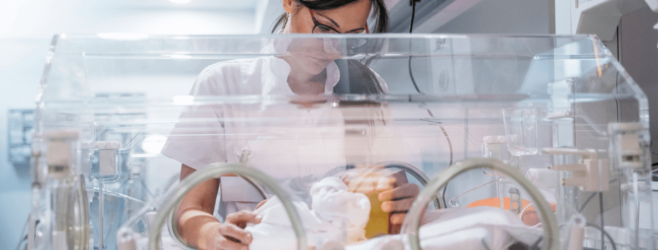
Premature infants encounter extra health challenges because their bodies are still developing. Birthing your baby earlier than expected can come with a lot of fears and worries. In my years of being a newborn nurse, I have cared for many preterm babies and walked alongside families who were concerned about their infant’s health.
One thing I have learned is that when parents and family understand and feel educated about their baby’s health needs, it actually helps them feel more at peace as they know what nurses are monitoring for and what to expect.
If your doctor stated that you or someone you love is at risk for a preterm birth, or you have a premature baby, I am glad you are here, so I can help you feel more knowledgeable as well.
By discussing potentially unfamiliar medical terms, premature infant health risks, and how nurses monitor for these complications, I can extend a caring hand to more families than I am able to meet in person.
What Is Prematurity in Infants?
If your baby is preterm (born before reaching 37 weeks of pregnancy), doctors might need to admit your child to the NICU (neonatal intensive care unit) for care and monitoring.
Here are some medical terms you may encounter:
- APGAR: A score given to the baby at 1 minute and 5 minutes of life to show their health right after birth, examining breathing effort, muscle tone, reflexes, heart rate, and skin color (with extra scores sometimes given every 5 minutes post-delivery until the infant is stable)
- Desaturation: Oxygen levels drop below normal
- Hypoxia: Low blood oxygen levels
- CPAP: Pressure given to help open up the airways, often via a mask
- Intubation: Process of placing a tube down the infant’s airway to help give breaths
- Ventilator: Machine that delivers breaths to the baby
- SGA (small for gestational age): Baby under the 10th percentile for expected weight at the week of pregnancy (gestation) they were born
- IUGR or FGR: IUGR (intrauterine growth restriction) or FGR (fetal growth restriction) for babies that fall under 10% in weight before being born
The types of complications that premature infants can experience can be very extensive. As a parent or family member, it is not your job to understand every condition possible.
If you have a premature infant, reach out to the hospital’s medical team, as they are there to help you understand any complications that are specific to your child.
Medical knowledge and advancements have come so far that with proper monitoring, care, and interventions from an experienced medical team, many babies heal without long-term complications from preterm birth.
Signs of Stress in Premature Infants
When a baby is premature, they are more prone to certain health issues. Your medical team should look for any warning signs to ensure that your child gets the care they need.
Delayed treatment can be a sign of medical malpractice, which can lead to long-term harm in serious cases. Learn about some of the most common signs of stress in premature infants.
Respiratory Distress for Premature Infants
Preterm babies can be born with underdeveloped lungs. These babies show they are having breathing difficulties by breathing too quickly, breathing too slowly, not breathing at all, having pauses in breathing (apnea), or working too hard to breathe.
They may need to be given oxygen to help increase their oxygen levels, pressure to help keep their lungs from collapsing between breaths, and breathing support for a period of time until they are breathing independently.
Premature infant lung development can also lead to lung complications like a pneumothorax (air leak causing a collapsed lung) and pneumonia (infection of the lungs).
Nurses monitor breathing rates, oxygen levels, and blood gases. Imaging tests like X-rays can be done to visualize complications of the lungs.
Temperature Regulation
Babies born before 37 weeks gestation can have problems maintaining a healthy body temperature. Normal newborn temperatures can range from 97.8°F to 99.3°F. A fever is defined as a temperature above 100.4°F and is a sign of infection.
Preterm infants mainly struggle with low body temperatures because of less overall body fat and decreased brown fat for heat production, along with other reasons associated with underdevelopment and premature infant weight.
The most accurate method of checking a newborn’s temperature is by using a rectal thermometer. Frequent monitoring of temperatures by nurses is done by checking a temperature in the armpit (axillary) or by a temperature probe (small sensor that sticks onto the skin).
Blood Sugar
Infants can have trouble regulating their blood sugar levels after delivery, but this risk is especially true for early babies. Low blood sugar levels are called hypoglycemia. Low body fat and decreased brown fat also play a role, as they help regulate blood sugar. Premature infants also have large brains, which demand more energy from blood sugar than they can often produce.
Preterm babies often have trouble feeding, which can lead to low blood sugar. Babies born to mothers with gestational diabetes are also at higher risk — especially if blood sugar wasn’t well controlled — because they may produce extra insulin in the womb, causing their blood sugar to drop after birth.
Nurses check blood sugar levels by collecting a small amount of blood from a sharp prick or through blood collection when sent to the hospital lab. Nurses help keep a baby’s blood sugar at a safe level by feeding them on a set schedule, either by bottle or through a tube that goes to the stomach. If needed, they can also give sugar through an IV using fluids called D10.
Birth Injuries and Preterm Babies
Premature infants are also at an increased risk for multiple birth injuries because of their underdeveloped bodies and fragility.
While some of these conditions are preventable, others are caused by medical mistakes made by health care providers before, during, or soon after delivery. Find out some of the most common birth injuries suffered by preterm infants.
Brain Bleed in Premature Infants
Preterm babies are more likely to experience an intraventricular hemorrhage (IVH), or brain bleed, due to their fragile blood vessels.
Bleeding in the brain can also lead to hydrocephalus in premature infants.
Cerebral Palsy (CP)
Cerebral palsy (CP) is a group of disorders that affect muscle control and movement. CP occurs due to damage to the brain and is often accompanied by seizures and various learning, speech, and swallowing disabilities.
Hypoxic-ischemic Encephalopathy (HIE)
Hypoxic-ischemic encephalopathy (HIE) is brain damage from decreased blood flow and oxygen. Babies born prematurely face a higher risk of HIE and often endure more severe health outcomes.
Jaundice in Premature Infants
Jaundice in premature newborns occurs when high levels of bilirubin (pigment released from blood cell breakdown) cause the skin to turn yellow.
When jaundice goes untreated, preterm infants are at risk of kernicterus brain damage, especially since their liver is underdeveloped and cannot properly process out excess bilirubin.
Meningitis in Premature Newborn Infants
Meningitis is an infection affecting the barrier around the brain and spinal cord, causing neurological injury. Premature infants are at greater risk for infections due to weak immunity.
Periventricular Leukomalacia (PVL)
Periventricular leukomalacia (PVL) is a condition involving damage to the white matter of the brain, which plays a vital role in its functioning.
Similac® and Enfamil™ Infant Formula in Premature Babies
Certain cow’s milk-based formulas like Enfamil™ and Similac® have been linked to an increased risk of necrotizing enterocolitis (NEC), a life-threatening intestinal disease in premature or low birth-weight children.
These formulas are often fed to premature babies who are receiving care in the NICU.
Premature Infant Development
Development delays in premature infants are common. These children may show delays in motor skills, speech, and even social skills. They are often behind their peers in skills like sitting, walking, and talking. Early identification and intervention can help with premature infant development.
While babies who are born early often encounter many health challenges, education and early awareness of any potential complications make a vital difference. If you notice any changes in your child, report them right away. As their parent or caregiver, your voice is important.
Get Help for Issues With Premature Infants
Sometimes birth injuries like the ones listed above could have been prevented with proper medical care, timely testing and interventions, and thorough assessments. Doctors and nurses should be educated and trained to properly care for your child.
If your premature infant was diagnosed with a birth injury or you believe they may have been harmed from improper or negligent care, our team is here to help you get the care and support you deserve.
Call us right now at (800) 914-1562 or fill out our case review form to see how we can help get the care and support your child deserves.