
 Questions?
What Is a Developmental Delay Caused by Periventricular Leukomalacia?
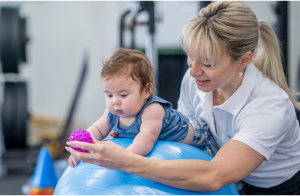 Periventricular leukomalacia and developmental delay means that a baby’s brain injury is affecting how they grow, move, or learn.
Periventricular leukomalacia is a type of white matter injury that occurs when the brain tissue near the cavities (ventricles) is damaged. This is often due to reduced blood or oxygen flow before, during, or shortly after birth.
PVL can disrupt the brain’s ability to control speech, movement, coordination, and thinking skills. A developmental delay caused by periventricular leukomalacia often becomes noticeable in the first months or years of life.
Recognizing early challenges can help families find answers — and get critical support sooner. A PVL lawsuit may help secure the compensation needed for your child’s lifelong care.
Some PVL cases result in multimillion-dollar settlements, providing families with resources to cover medical expenses, therapy, and specialized support.
An experienced birth injury lawyer can fight for the money your family deserves. The experienced attorneys in our network have helped recover over $1.1 billion, including for cases involving PVL.
We can help families in all 50 states. Find out if we can help you — get a free case review right now.
How Do Periventricular Leukomalacia and Developmental Delays Happen?
PVL damages areas of the brain that are critical for sending signals throughout the body. This damage is often caused by a lack of oxygen or blood flow.
When white matter is injured, it can disrupt brain functions needed for movement, speech, and learning. These disruptions may lead to developmental delays as the child grows.
Some children with mild PVL may have only minor delays that are hard to notice, while others may need long-term support. Developmental challenges often become more noticeable in infancy or toddlerhood as milestones are missed.
Types of Periventricular Leukomalacia and Developmental Delay
Children with PVL may experience different types of developmental delays depending on the severity and location of the white matter damage.
In some cases, delays appear alongside other early symptoms of PVL, like poor muscle tone, feeding difficulties, or abnormal reflexes. As a child grows, missed milestones may become more noticeable and concerning to parents and caregivers.
- Cognitive delays: Challenges with attention, memory, learning, or problem-solving
- Motor function delays: Difficulty with movement, like sitting, crawling, or walking
- Sensory processing issues: Abnormal responses to sounds, lights, or other input
- Social and emotional delays: Trouble forming relationships, managing emotions, or engaging with others
- Speech and language delays: Difficulty speaking, understanding words, or using language effectively
Early intervention — including physical, occupational, and speech therapies — may improve a child’s developmental outcomes and overall quality of life after a PVL diagnosis.
Early Signs of a Developmental Delay Caused By Periventricular Leukomalacia
Every child develops at their own pace, but consistently missing milestones may be an early sign of brain damage like PVL. Some signs may appear within the first few weeks, while others become more noticeable over time.
Signs of Periventricular Leukomalacia and Developmental Delay in Newborns (0–3 Months)
Newborns with PVL may show signs of neurological injury shortly after birth, especially if the damage is moderate to severe.
- Floppy or stiff muscles (hypotonia or hypertonia)
- Poor feeding or difficulty latching
- Seizures, twitching, or staring spells
- Unusual crying patterns, like persistent irritability or high-pitched cries
- Weak or absent reflexes, such as sucking, rooting, or startle
These signs may be more common with other red flags of birth injuries, like neonatal intensive care unit (NICU) admission.
Signs of Periventricular Leukomalacia and Developmental Delay in Infants (3–9 Months)
Depending on the severity and cause of PVL, signs of developmental delay may not become noticeable until babies begin to engage more with their environment.
- Difficulty holding up the head without support
- Limited eye contact or reduced interest in surroundings
- Little or no movement in the arms or legs
- Muscle stiffness or floppy limbs
- Trouble rolling over or pushing up when lying on the stomach
Some babies may also favor one side of the body, which can be an early sign of motor impairment linked to PVL.
Signs of Periventricular Leukomalacia and Developmental Delay in Toddlers (1–3 Years)
As children grow, PVL-related delays often affect walking, talking, and basic skills needed for daily life.
- Delayed speech or difficulty using simple words
- Poor balance or frequent falls
- Problems interacting with others or showing limited emotional expression
- Struggling with tasks like stacking blocks or feeding themselves
- Trouble learning new things or following simple directions
- Unable to walk by 18 months or walking with an unusual gait
If you’ve noticed symptoms in your child and aren’t sure if it could be a developmental delay caused by periventricular leukomalacia, our experienced labor and delivery nurses are here to help — at no cost to you.
Connect with one of our registered nurses now.

Beth has more than 18 years of specialized experience in labor and delivery. She’s available to hear your story and help you figure out the cause of your child’s injury — and what you can do next.
Talk to A Nurse Now
Call or chat with a caring, experienced nurse right now — we’re standing by to get you help and answers.
How Periventricular Leukomalacia and Developmental Delays Affect Milestones
All babies grow at their own pace, but children with periventricular leukomalacia may need extra support to reach developmental milestones. Tracking your child’s progress is one of the best ways to recognize delays early and get help when it matters most.
- Cognitive: Exploring objects, recognizing familiar people, showing curiosity
- Motor skills: Holding up the head, sitting, crawling, standing, and walking
- Self-help: Grasping toys, feeding, holding a cup, or attempting to dress
- Social and emotional: Smiling, responding to emotions, engaging with others
- Speech and language: Making sounds, babbling, using words, understanding directions
Children with PVL may reach these milestones later than expected — or in a different order — depending on how the brain injury has affected their white matter development.
Keeping a milestone journal or using a developmental checklist can help you spot early concerns and share them with your child’s pediatrician.
If you’re concerned your child may be showing signs of a PVL-related developmental delay, take our free milestone quiz.
IS YOUR CHILD MISSING DEVELOPMENTAL MILESTONES?
Take Our Milestones Quiz
Taking note of your child’s physical, social, and emotional skills can help you determine if they potentially suffered from an injury at birth. An early diagnosis can help your child get the treatment they need as soon as possible.
Q1: How old is your child?
0-2 MONTHS DEVELOPMENTAL MILESTONES QUIZ
- Q2: Can your child hold their head steadily on their own?
- Q3: Can your child push themselves up when they are lying on their stomach?
- Q4: Has your child started to make smoother movements with their arms and legs?
- Q5: Does your child smile at other people?
- Q6: Can your child bring their hands to their mouth?
- Q7: Does your child turn their head when they hear a noise?
- Q8: Does your child coo or make gurgling noises?
- Q9: Does your child follow things with their eyes?
- Q10: Does your child try to look at their parents or caregivers?
- Q11: Does your child show boredom, cry, or fuss when engaged in an activity that hasn’t changed in a while?

3-4 MONTHS DEVELOPMENTAL MILESTONES QUIZ
- Q2: Can your child hold their head steadily on their own?
- Q3: Does your child push down on their legs when their feet are on a flat surface?
- Q4: Has your child started to roll over from their stomach to their back?
- Q5: Can your child hold and shake a toy such as a rattle?
- Q6: Does your child bring their hands to their mouth?
- Q7: Does your child play with people and start to cry when the playing stops?
- Q8: Does your child smile spontaneously, especially at people?
- Q9: Does your child copy some movements and facial expressions of other people?
- Q10: Does your child babble with expressions and copy sounds they hear?
- Q11: Does your child cry in different ways to show hunger, pain, or tiredness?
- Q12: Does your child respond to affection like hugging or kissing?
- Q13: Does your child follow moving things with their eyes from side to side?
- Q14: Does your child recognize familiar people at a distance?

5-6 MONTHS DEVELOPMENTAL MILESTONES QUIZ
- Q2: Can your child roll over on both sides (front to back/back to front)?
- Q3: Has your child begun to sit without support?
- Q4: Does your child rock back and forth?
- Q5: Can your child support their weight on their legs (and perhaps bounce) when standing?
- Q6: Has your child begun to pass things from one hand to the other?
- Q7: Does your child bring objects such as toys to their mouth?
- Q8: Does your child know if someone is not familiar to them and is a stranger?
- Q9: Does your child respond to other people’s emotions, such as a smile or a frown?
- Q10: Does your child enjoy looking at themselves in the mirror?
- Q11: Does your child look at things around them?
- Q12: Does your child respond to sounds they hear by making sounds themselves?
- Q13: Does your child make sounds to show joy or displeasure?
- Q14: Does your child respond to their own name?
- Q15: Has your child started to string vowels together, such as "ah," "eh," or "oh," or started to say consonant sounds such as "m" or "b"?
- Q16: Has your child begun to laugh?

7-9 MONTHS DEVELOPMENTAL MILESTONES QUIZ
- Q2: Can your child crawl?
- Q3: Can your child stand while holding on to something to support them?
- Q4: Can your child sit without support?
- Q5: Can your child pull themselves up to stand?
- Q6: Does your child play peekaboo?
- Q7: Can your child move things from one hand to the other?
- Q8: Can your child pick small things up, such as a piece of cereal, with their thumb and index finger?
- Q9: Does your child look for things that they see you hide?
- Q10: Does your child watch the path of something as it falls?
- Q11: Does your child show fear when around strangers?
- Q12: Does your child become clingy with adults who are familiar to them?
- Q13: Does your child have favorite toys?
- Q14: Does your child use their fingers to point?
- Q15: Does your child understand “no”?
- Q16: Does your child make a lot of repetitive sounds, such as “mamama” or “bababa”?
- Q17: Does your child copy the sounds and gestures of other people?

10-12 MONTHS DEVELOPMENTAL MILESTONES QUIZ
- Q2: Can your child stand alone with no support?
- Q3: Does your child walk while holding on to furniture?
- Q4: Can your child take a few steps without holding on to anything?
- Q5: Can your child get into a sitting position without any help?
- Q6: Does your child bang two things together when playing?
- Q7: Does your child poke with their index finger?
- Q8: Has your child started to use things like hairbrushes or drinking cups correctly?
- Q9: Does your child find hidden objects easily?
- Q10: Does your child play peekaboo or pat-a-cake?
- Q11: Does your child become shy or nervous around strangers?
- Q12: Does your child repeat actions or sounds to get attention?
- Q13: Does your child put out an arm or leg to help when getting dressed?
- Q14: Does your child cry when a parent leaves the room?
- Q15: Does your child show that they have favorite things or people?
- Q16: Does your child show fear?
- Q17: Does your child say things such as “mama,” “dada,” or “uh-oh”?
- Q18: Does your child try to say the words you say?
- Q19: Has your child started to use gestures like waving or shaking their head “no”?

13-18 MONTHS DEVELOPMENTAL MILESTONES QUIZ
- Q2: Can your child walk by themselves?
- Q3: Does your child walk up stairs and run?
- Q4: Does your child pull toys while walking?
- Q5: Can your child drink from a cup on their own?
- Q6: Can your child eat with a spoon on their own?
- Q7: Can your child help undress themselves?
- Q8: Does your child have occasional temper tantrums?
- Q9: Does your child show affection to familiar people?
- Q10: Does your child become clingy in new situations?
- Q11: Does your child explore their environment alone with parents close by?
- Q12: Can your child say several single words?
- Q13: Can your child say and shake their head “no”?
- Q14: Does your child point to show things to other people?
- Q15: Does your child scribble?
- Q16: Does your child know what ordinary products such as phones, spoons, and brushes are used for?
- Q17: Can your child follow one-step commands such as “sit down” or “stand up”?
- Q18: Does your child play with a doll or stuffed animal by pretending to feed it?

19-23 MONTHS DEVELOPMENTAL MILESTONES QUIZ
- Q2: Has your child begun to run?
- Q3: Has your child kicked a ball?
- Q4: Can your child climb down and onto furniture on their own?
- Q5: Can your child walk up and down stairs while holding on?
- Q6: Can your child stand on their tiptoes?
- Q7: Has your child thrown a ball overhand?
- Q8: Does your child copy others, especially people older than them?
- Q9: Does your child get excited around other children?
- Q10: Has your child shown more independence as they've aged?
- Q11: Does your child do what they were told not to do and become defiant?
- Q12: Does your child point to things when they are named?
- Q13: Does your child know names of familiar people or body parts?
- Q14: Does your child say 2 to 4-word sentences?
- Q15: Does your child repeat words they hear?
- Q16: Does your child complete sentences and rhymes in familiar books?
- Q17: Does your child name items in books, such as dogs, cats, and birds?
- Q18: Does your child play simple pretend games?
- Q19: Has your child started to use one hand more than the other?
- Q20: Has your child begun to sort shapes and colors?
- Q21: Does your child follow 2-step instructions, such as “pick up your hat and put it on your head?”

24+ MONTHS DEVELOPMENTAL MILESTONES QUIZ
- Q2: Can your child run easily?
- Q3: Can your child climb?
- Q4: Can your child walk up and down stairs with one foot on each step?
- Q5: Can your child dress and undress themselves?
- Q6: Does your child show affection for friends without being told?
- Q7: Does your child take turns when playing games?
- Q8: Does your child show concern when others are crying?
- Q9: Does your child understand the idea of “mine" and "theirs"?
- Q10: Does your child show many different emotions?
- Q11: Does your child copy adults and friends?
- Q12: Does your child separate easily from their parents?
- Q13: Does your child get upset when there is a major change in their routine?
- Q14: Does your child say words such as “I,” “me,” “we,” “you,” and some plural nouns?
- Q15: Can your child say their first name, age, and gender?
- Q16: Can your child carry on a conversation with 2 to 3 sentences?
- Q17: Can your child work toys with buttons and other moving parts?
- Q18: Does your child play pretend with dolls, animals, or people?
- Q19: Can your child finish 3 or 4 piece puzzles?
- Q20: Can your child copy a circle when drawing?
- Q21: Can your child turn pages of a book one page at a time?
- Q22: Can your child turn door handles?



Diagnosing Periventricular Leukomalacia and Developmental Delays
Periventricular leukomalacia and developmental delays are usually diagnosed through a combination of evaluations. Doctors often begin with general developmental screenings during routine checkups.
These screenings check a child’s progress in areas like movement, speech, learning, and social interaction. If delays are noticed, more in-depth evaluations may follow.
- Developmental checklists to compare your child’s progress to typical age ranges
- Neuroimaging tests, like magnetic resonance imaging (MRI) or cranial ultrasound
- Neurological exams to check reflexes, muscle tone, posture, and coordination
- Referrals to specialists, such as pediatric neurologists or developmental pediatricians
Early diagnosis of PVL is important. Identifying a developmental delay caused by periventricular leukomalacia can help families begin therapies and supportive care that may improve long-term outcomes.
Can You Prevent Periventricular Leukomalacia and Developmental Delays?
Not all developmental delays caused by periventricular leukomalacia can be prevented. The severity of a child’s challenges often depends on how early the brain injury occurred and whether proper care was provided.
In some cases, PVL may have been avoidable with timely medical intervention. If doctors failed to recognize or respond to risk factors, the resulting injury may be considered medical negligence.
- Careful monitoring during labor to catch signs of fetal distress
- Prompt treatment of maternal infections, such as chorioamnionitis
- Specialized care for premature infants, including breathing and brain support
- Timely delivery, including emergency C-section when medically necessary
When providers fail to act appropriately, the brain damage that results can lead to lifelong developmental delays. In these cases, families may be eligible for compensation through a periventricular leukomalacia settlement.
If you believe medical negligence may have caused your child’s PVL, our team can help you understand your legal options.
Get a free legal case review right now to find out if you may qualify.
Treating Periventricular Leukomalacia and Developmental Delay
While there is no cure for PVL, early and consistent treatment can help many children make meaningful progress.
The goal of treatment is to support your child’s development, improve their quality of life, and help them reach their full potential. Treatment plans are personalized based on the child’s specific delays and medical needs.
- Assistive devices, such as braces, walkers, or communication tools
- Behavioral therapy to support emotional development and social skills
- Occupational therapy to help with feeding, dressing, and other daily tasks
- Physical therapy to improve strength, balance, and coordination
- Special education services to provide individualized learning support
- Speech therapy to improve language skills and feeding or swallowing issues
These therapies can be critical for long-term progress, but the cost can add up over time. Some families may qualify to file a PVL claim for compensation to help cover the cost of care and secure additional support.
Get Legal Help for Your Child’s PVL Developmental Delay
Caring for a child with periventricular leukomalacia and developmental delays can be overwhelming — emotionally, physically, and financially.
Families often face years of therapy, specialist visits, and support services to help their child thrive.
An experienced PVL lawyer may be able to help if medical negligence caused your child’s condition. Many families choose to file a birth injury claim and pursue compensation for treatment, care, and long-term support.
The Birth Injury Justice Center works with experienced attorneys who can help families in all 50 states.
Our trusted network of lawyers has secured more than $1.1 billion for families affected by preventable birth injuries like PVL, and they may be able to help your family, too.
Call us at (800) 914-1562 right now or fill out this form to see if we may be able to help you seek the justice and compensation your family deserves.
Periventricular Leukomalacia and Developmental Delay FAQs
Periventricular leukomalacia (PVL) is not a developmental disability itself — it is a type of brain injury that can lead to developmental disabilities.
PVL involves damage or death of periventricular white matter near the brain’s ventricles, often caused by reduced oxygen or blood flow, especially in premature infants.
White matter helps send signals throughout the brain. When it’s damaged, this can affect movement, coordination, thinking, and learning.
As a result, children with PVL may go on to develop cerebral palsy, learning disabilities, or other developmental delays.
The long-term effects of periventricular leukomalacia vary depending on the severity and location of the brain injury. Many children with PVL experience ongoing neurological and developmental challenges.
Common long-term effects of PVL include:
- Developmental delays, including slower progress in motor skills, speech, and learning
- Intellectual disabilities, such as difficulties with memory, attention, or problem-solving
- Seizure disorders, which may occur in children with more severe PVL
- Spastic cerebral palsy, especially diplegia, which affects muscle tone and movement, often in the legs
- Vision or hearing problems due to impaired brain processing of sensory input
If your child has PVL and you’re concerned about their future, connect with our team to learn how we may be able to help.
Call us at (800) 914-1562 or Click to Live Chat with a member of our team.
Children with PVL often face long-term challenges with movement, learning, and development. Many are later diagnosed with cerebral palsy, especially spastic diplegia.
Some may also experience delays in motor skills, speech, and cognitive abilities. The outcome depends on how severe the brain injury is, but most children with PVL need ongoing support and therapy.
Yes, periventricular leukomalacia can cause hypotonia, or low muscle tone, especially in the early months of life.
Some babies with PVL may feel floppy or have trouble holding up their head or moving their limbs. As they grow, hypotonia may improve or shift to high muscle tone (spasticity), particularly in children later diagnosed with cerebral palsy.
PVL does not directly cause autism, but some studies suggest a possible link between PVL and a higher risk of autism spectrum disorder (ASD).
Both conditions affect brain development, and children with PVL may show social or communication challenges that overlap with autism. A medical evaluation is needed to determine an accurate diagnosis and appropriate support.